專題著作・第 10 篇
法會眾與共同聞法
認識《大日經》10 Understanding the Mahāvairocana Sūtra – Part 10 不空師父/文 Written by Master BuKong
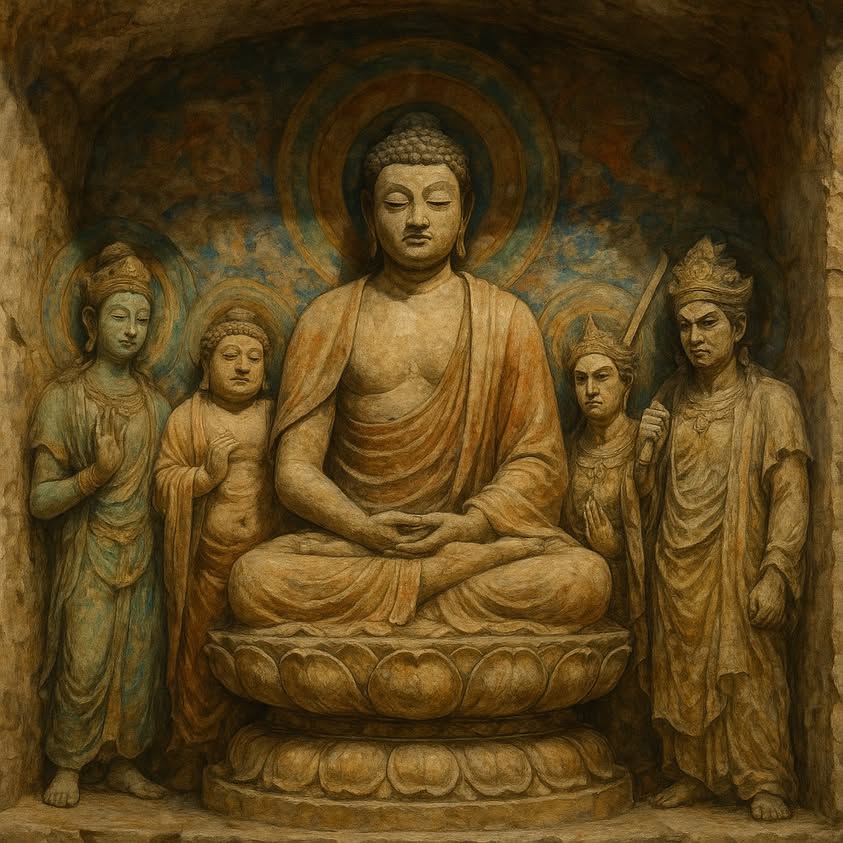
先前提到的執金剛,主要象徵如來的智慧印記;而菩薩眾則兼具定力與智慧,更充滿慈悲,他們同樣象徵大日如來內在證得的功德之顯現。 The previously mentioned Vajra-holders primarily symbolize the wisdom seals of the Tathāgata. In contrast, the assembly of Bodhisattvas embodies both meditative stability and wisdom, along with great compassion. They too represent the inner realization and virtues of Mahāvairocana Buddha.
正如執金剛各自有對應的無數眷屬,數量如十佛剎微塵那樣多,同樣地,這些菩薩的法門也對應無量眾生來響應。 Just as each Vajra-holder has countless corresponding retinues—numbering as numerous as the dust particles of ten Buddha-lands—so too do the Dharma practices of these Bodhisattvas respond to and resonate with immeasurable sentient beings.
因為如來的加持力,菩薩們都能從法界中,顯現為不同的善知識形象,來教化眾生。 Through the empowerment of the Tathāgata, these Bodhisattvas can manifest various skillful forms of spiritual teachers (kalyāṇamitra) from the Dharma realm to teach and transform sentient beings.
《大日經》所說的加持化身也是這樣,執金剛持有如來的密印,因此被稱作「內眷屬」;而菩薩們以無量慈悲與巧妙方便,普遍攝化眾生,協助如來實踐佛事,這些就被稱為「大眷屬」。 The empowered emanations described in the Mahāvairocana Sūtra operate in the same manner. The Vajra-holders bear the secret seals of the Tathāgata and are thus known as "inner retinues". Bodhisattvas, through their boundless compassion and skillful means, universally guide and convert beings, assisting the Tathāgata in enacting the Buddha’s work—these are referred to as the “great retinue.”
諸大眷屬菩薩聖眾,以四位上首大菩薩為代表: Among the great Bodhisattva retinues, four eminent Bodhisattvas serve as their representatives:
「普賢菩薩」 「普」代表遍及一切,「賢」表示最圓滿美善。象徵如來自證德行圓滿,欲教化眾生證得同樣的境界。此為菩薩以菩提心發起的願力與行為,無論是身、口、意,都遍及一切,充滿妙善與各種功德,因此得名「普賢」。 Samantabhadra Bodhisattva: “Samanta” means all-pervading, and “Bhadra” denotes supreme goodness. This Bodhisattva symbolizes the perfect realization of the Tathāgata’s virtues and vows to guide beings toward the same realization.
「慈氏(彌勒)菩薩」 因具備四無量心之一的廣大慈心,宣說妙法讓眾生聽聞,這種慈心源自如來的種性,讓佛法在世間不斷延續,因此名為「慈氏」。 Maitreya Bodhisattva: Named for his immense compassion, one of the Four Immeasurables, Maitreya proclaims sublime teachings so that beings may hear and be uplifted.
「妙吉祥菩薩」 「妙」代表佛無上的智慧,像醍醐一樣純淨無比,梵文「室利」意譯為吉祥,象徵具備一切美善德行,這些都是在讚頌其智慧與功德圓滿,因此稱為「妙吉祥」。 Mañjuśrī (Mañjughoṣa) Bodhisattva: “Mañju” means wondrous or sublime, representing the unsurpassed wisdom of the Buddha. “Śrī” is translated as auspiciousness, signifying a being full of all noble qualities.
「除一切蓋障菩薩」 眾生心中各種煩惱污垢,遮蔽清淨智慧之性,讓人無法明見真理。若能破除一切妄想戲論,如同驅散雲霧使日光重現,因此名為「除一切蓋障」。 Sarvanīvaraṇaviṣkambhī Bodhisattva (Remover of All Obstructions): Removes all mental afflictions and conceptual obscurations, like dispersing clouds to reveal the shining sun of wisdom.
這四位菩薩正是佛身所具的四種根本德行,若缺其中之一,就無法成就究竟的佛果。 These four Bodhisattvas represent the four fundamental virtues inherent in the Buddha’s body. Without any one of them, ultimate Buddhahood cannot be achieved.
因此他們被列為眾菩薩中的上首,總攝無量無邊的德行。 Thus, they are placed at the forefront among the Bodhisattvas, encompassing and exemplifying limitless virtues.
所謂「大菩薩」,梵文是「摩訶菩提薩埵」,依《大智度論》解釋,「菩提」是指佛的覺道;「薩埵」意思是眾生,也可以理解為「勇心」。 The term “Great Bodhisattva” is rendered in Sanskrit as Mahā-bodhisattva. According to the Mahāprajñāpāramitā-śāstra, “bodhi” refers to the way of the Buddha, and “sattva” means a being or courageous mind.
因為在眾多有情當中,「大菩薩」興起大慈悲,建立大乘之道,說法破除眾生的錯誤邪見、愛欲、自我中心等煩惱,並且以永不退轉的大勇氣,發願成就如來的功德,就像金剛山一樣穩固。 Among all sentient beings, the Great Bodhisattva arises with vast compassion, establishes the Mahāyāna path, teaches to dispel beings’ delusions, attachments, and ego-centered views, and with unwavering courage vows to realize the Buddha’s qualities. This determination is as steadfast as Mount Vajra.
所以,善無畏阿闍黎說:「若依最正確的梵文語義,應該是說『菩提索哆』。其中『索哆』意思是指能忍耐、樂於修行、堅持到底而不放棄的精神。」 Therefore, Ācārya Śubhakarasiṃha stated, “According to the most accurate Sanskrit meaning, it should be rendered ‘Bodhi-sattva.’ The term ‘sattva’ implies endurance, joy in practice, and unwavering perseverance.”
在梵文聲音語言學上,也有這樣的規則,當文字意義正確,但若發音不順口、不方便使用,可以調整採用較通順的形式。 In Sanskrit phonetics and linguistics, it is acceptable to adapt correct meanings into more fluid or convenient pronunciations for ease of use.
因此當世間論師便稱「菩提索哆」為「菩提薩埵」,後來傳承的人也就順應這個用法了。 Thus, worldly scholars refer to “Bodhi-sattva” as “Bodhisattva,” and later generations continued using this adapted form.
根據《瑜伽宗》的觀點,「薩埵」可以大致分為三種層次: According to the Yogācāra school, “sattva” can be classified into three general types:
第一類叫作「愚童薩埵」 是指六道中的凡夫,不明究竟真理與因果正理,行為偏邪、造作苦果,又執著三界欲樂,難以捨離,因此被稱為「愚童薩埵」。 (1) Ignorant Sattva (foolish beings): These are ordinary beings in the six realms who are unaware of ultimate truth and proper causality. They act unwholesomely, reap suffering, and cling to the pleasures of the three realms. Hence, they are called “Ignorant Sattvas.”
第二類是「有識薩埵」 這是指聲聞與緣覺二乘修行人。他們剛剛覺察生死的痛苦,希望能夠自我解脫、證入涅槃,執著於暫時的方便之道(如保護性的化城),認為證涅槃就是究竟,不曾生起對如來無上功德的深心願求,因此稱作「有識薩埵」。 (2) Insightful Sattva: These refer to Śrāvakas and Pratyekabuddhas who have recognized the suffering of saṃsāra and seek liberation. Clinging to expedient attainments like the “illusory city,” they consider nirvāṇa the end goal and do not yet aspire to the supreme virtues of the Tathāgata. Thus, they are called “Insightful Sattvas.”
第三類是「菩提薩埵」 真正追求無上菩提的菩薩,他們超越一切推測與戲論,遠離一切妄念與障礙,所追求的是純善、清淨、微妙、無可比擬的真實智慧,這就是眾生本具的不可思議心性。 (3) Bodhi Sattva: These are the true Bodhisattvas who seek supreme enlightenment. They transcend all conceptual fabrications and delusions, pursuing pure, sublime, and incomparable wisdom—reflecting the inconceivable mind-nature inherent in all beings.
因此,能夠忍受成佛這條道路上的一切困難,發心修行、意志堅定而不動搖的,稱為「菩提索哆」(意指堅忍修行者)。 Therefore, one who can endure all hardships on the path to Buddhahood, who generates the aspiration and steadfastly practices without wavering, is called “Bodhisattva” (meaning one who courageously perseveres in practice).
他們在所有修行者中,功德最為殊勝,將佛法傳授給一切眾生,因此稱為「摩訶菩提薩埵」(大菩薩)。 Among all practitioners, their merit is supreme, as they are capable of transmitting the Dharma to all beings. Hence, they are honored as Mahā-bodhisattvas—Great Bodhisattvas.
這些大菩薩,圍繞在大日如來的四周,前後恭敬侍立,以無量的身、口、意供養禮敬大日如來,恭敬受持如來所說之法。 These Great Bodhisattvas surround Mahāvairocana Buddha on all sides, standing respectfully before and behind him. With boundless acts of body, speech, and mind, they venerate and serve the Buddha and earnestly uphold the Dharma he proclaims.
Translated into English by ChatGPT.