專題著作・第 06 篇
如來信解遊戲神變
認識《大日經》06 Understanding the Mahāvairocana Sūtra – Part 06
不空師父/文 Written by Master BuKong
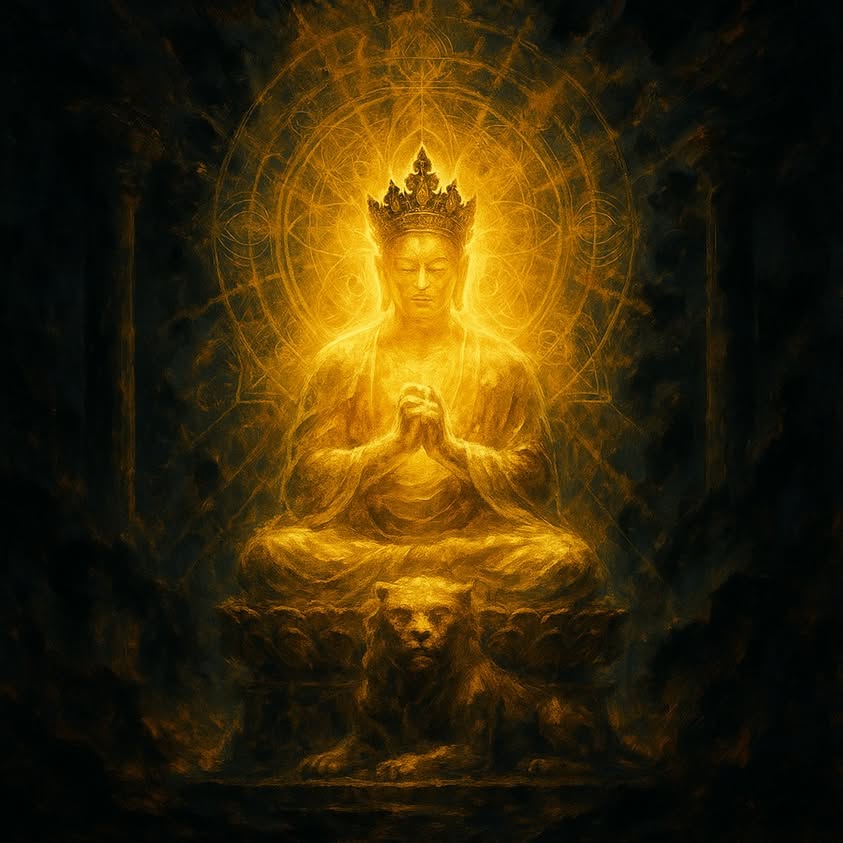
大眾已集後,如來自然應當有說法的實際場所,所以《大日經》接著說:「如來信解遊戲神變生大樓閣寶王,高無中邊,諸大妙寶王種種間飾,菩薩之身為師子座...」 After the great assembly has gathered, it is natural that the Tathāgata should have an actual place for giving teachings. Thus, the Mahāvairocana Sūtra continues: “The Tathāgata, through faith, understanding, playful ease, and miraculous transformation, manifests the great jeweled tower-king, immeasurable in height, without center or boundary, adorned with all kinds of great precious treasures, where the body of the bodhisattva becomes the lion’s throne…”
「信解」 是行者最初真正發菩提心,直到成佛為止,這整個成佛的修行過程,皆可稱為「信解地」。 “Faith and understanding” (śraddhā-abhiṣaṃbodhi) refers to the entire process of spiritual development—from the initial arousing of the bodhicitta (the aspiration for enlightenment) all the way to Buddhahood. This entire path of realization can be called the “Stage of Faith and Understanding.”
「遊戲神變」 梵語原為「微吃哩抳多」,有踴躍、遊戲、神變等複合義。 “Playful and miraculous transformation” (Skt: vicitra-nṛtya) carries meanings of joy, playfulness, and supernatural manifestation.
「踴躍」 指從初發菩提心以來,不斷深植善根、發起各種誓願與行動,以莊嚴佛國、成就眾生,不斷精進不退,這種勇猛向上升騰的狀態。 “Leaping upward” represents the continuous effort from the first generation of bodhicitta—planting deep roots of virtue, making vast vows, and engaging in countless actions to adorn Buddha-lands and benefit sentient beings. It is a symbol of unceasing courageous upward momentum.
「遊戲神變生」 其實就是菩薩所具備的自在神通力。比喻以擊鼓聲使人起舞,同樣的菩薩以身口意金剛三業,巧妙運用神通,使行者身心喜悅。 “Playful miraculous manifestation” refers to the bodhisattva’s mastery of effortless supernatural power. Just as the sound of drumming makes people dance, likewise the bodhisattva, through skillful use of the vajra-like three karmic activities (body, speech, and mind), brings joy to the hearts and minds of beings.
「大樓閣寶王」是說大日如來自利利他的圓滿具足,成就由智慧寶藏功德所聚集而成的祕密莊嚴法界寶樓,可說是在所有真實報身中最為殊勝的顯現。 The “Great Jeweled Tower-King” symbolizes Mahāvairocana Buddha’s perfect realization of both self-benefit and benefiting others, manifesting as a secretly adorned Dharma Realm palace formed by accumulated wisdom-treasure merits—one of the most sublime expressions among all the true reward bodies.
這座寶樓閣高度無盡、廣度無邊,因為無有邊際,故無「中間」,因為法身遍一切處所住處,所以樓閣亦廣大遍一切處。 This jeweled tower is infinitely tall and vast without limit. Since it has no boundary, it also has no central point. Because the Dharma body (dharmakāya) pervades all places, this jeweled tower likewise extends throughout all realms.
這座大寶樓閣,以如來種種功德,所化現的金剛珍寶點綴莊嚴。這是表示,再也沒有任何一法,能超出如來具足的珍貴功德。 This great jeweled tower is adorned with vajra-like precious jewels transformed from the Tathāgata’s boundless merits. This implies that there exists no Dharma surpassing the supreme virtues possessed by the Tathāgata.
大寶樓閣的本質,本是「第一寂滅相」,不能得見,由於如來加持之力,使應度的眾生,隨各自根器而能見到各種法門,依自身能見、能聽、能觸、能知,進入大日如來的「法身界門」。 The essential nature of the tower is the “supreme aspect of quiescence” and cannot be perceived by ordinary means. However, through the Tathāgata’s empowering blessing, beings suitable for liberation can perceive various Dharma gates according to their capacity—through seeing, hearing, touching, or knowing—and thereby enter the Dharma realm of Mahāvairocana’s Dharma body.
如同《華嚴經》<入法界品>中的善財童子五十三參,進入彌勒菩薩的大樓閣宮殿的殊勝境界。 This is like the story in the Avataṃsaka Sūtra, in the Entering the Dharma Realm Chapter, where the youth Sudhana, during his fifty-three spiritual encounters, enters the magnificent palace of Maitreya Bodhisattva.
關於「菩薩之身為師子座」,可以思惟一下,是否從字面上很難看出這是什麼意思?接下來將進一步說明。 Regarding the phrase “the body of the bodhisattva is the lion’s throne,” one might wonder—what does this actually mean beyond the literal words? Let us now examine its deeper significance.
「師子」代表勇猛精進的菩提心。從最初發心起,就具有大精進力,無有怯懦,就如師子抓住獵物必定得手,象徵菩薩以自在神通度化眾生,無有空過。 The lion symbolizes courageous and vigorous bodhicitta. From the very first arousing of this mind, the practitioner advances with great diligence and without hesitation—like a lion that always captures its prey. This represents the bodhisattva’s effortless, effective liberation of beings without failure.
字面上的淺釋,是指菩薩因深信尊重佛法,願以自身作為承載如來功德身的師子座,因此說「菩薩之身為師子座」。 On a surface level, it means that the bodhisattva, out of profound reverence for the Dharma, is willing to offer his very body to serve as the lion’s throne that bears the glorious form of the Tathāgata.
但從深義來說,不論是金剛法界宮,或是大寶樓閣,乃至現在說的師子之座,同樣皆如來法身的顯現因緣。 From a deeper perspective, whether it be the Vajra Dharma Palace, the Great Jeweled Tower, or the lion’s throne, all are manifestations of the Tathāgata’s Dharma body.
《大智度論》中也說:「如獅子在百獸中獨行無懼,佛在九十六種外道中亦無畏降伏一切,因此稱為『人中之師』。所以如來所坐之地,不論是床還是地面,都稱為『師子座』。」 The Mahāprajñāpāramitā-śāstra also states: “Just as a lion walks fearlessly among all beasts, so too does the Buddha, who fearlessly subdues the ninety-six kinds of non-Buddhist paths, earning him the title ‘Lion among Humans.’ Wherever the Tathāgata sits—be it a seat or the ground—is thus called the lion’s throne.”
故「菩薩之身」深刻的意思是指,從初發心修菩薩道時,菩薩一步步修行各地波羅蜜,直到成就第十一地-佛地圓滿為止。每一地都建立在前一地之上。 Thus, the deeper meaning of “bodhisattva’s body as the lion’s throne” is that it represents the cumulative body of practice through countless kalpas of bodhisattva cultivation—progressing step by step through the ten pāramitās and the eleven bodhisattva grounds—culminating in Buddhahood.
因此大日如來所坐的師子之座,從深意來說,是由因地時行菩薩道的歷劫累地的修行身,所成就的師子之座。 The lion’s throne that Mahāvairocana Buddha sits upon is, in essence, the body of accumulated merit and realization cultivated throughout the entire bodhisattva path.
Translated into English by ChatGPT.